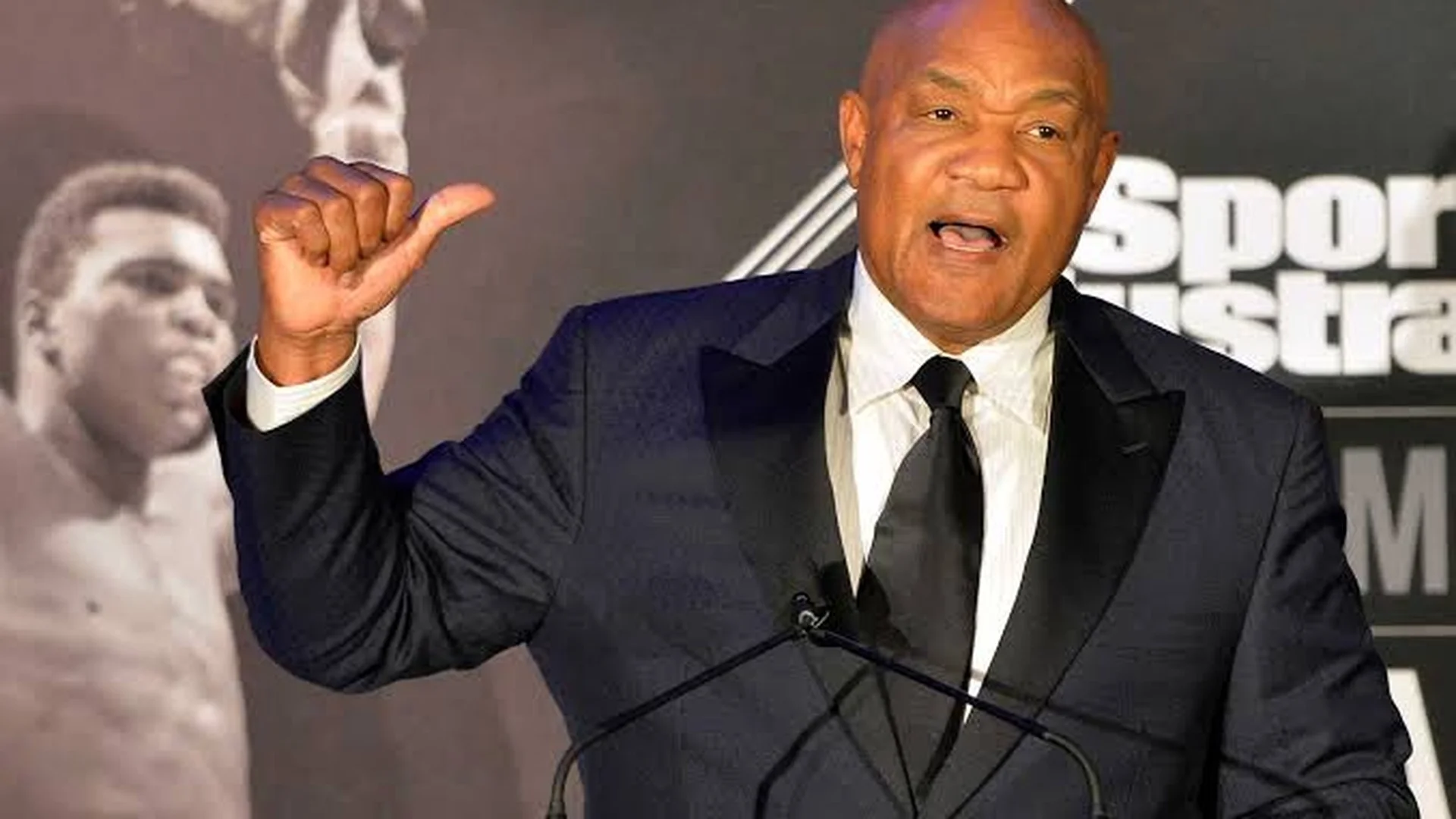
George Foreman had an estimated net worth of $300 million at the time of his death in March 2025, according to Celebrity Net Worth. While his legendary boxing career earned him millions, the majority of his fortune came from his success as an entrepreneur. His biggest financial breakthrough was the George Foreman Grill, which became a global commercial success and reportedly generated more than $200 million for him over the years. Foreman’s journey from two-time heavyweight champion to highly successful businessman made his $300 million fortune one of the most remarkable financial comebacks in sports history.
Quick Facts
| Detail | Information |
| Full Name | George Edward Foreman |
| Net Worth | Approximately $300 million |
| Profession | Former professional boxer, entrepreneur, ordained minister |
| Born | January 10, 1949, Marshall, Texas |
| Died | March 2025 |
| Primary Income Source | George Foreman Grill endorsement and royalty deal |
George Foreman’s net worth stood at an estimated $300 million at the time of his death, making him one of the wealthiest former athletes in the world. Most people assume that fortune came from the boxing ring. It did not. The bulk of it traces back to a single kitchen appliance and one of the most lucrative endorsement deals in sports history.
Early Life and Background
George Foreman was born on January 10, 1949, in Marshall, Texas, and grew up in Houston’s Fifth Ward. He struggled with discipline as a teenager before a mentor connected him to boxing through the Job Corps program. That introduction changed the course of his life and led to a gold medal at the 1968 Mexico City Olympics, followed by a career as a two-time world heavyweight champion.
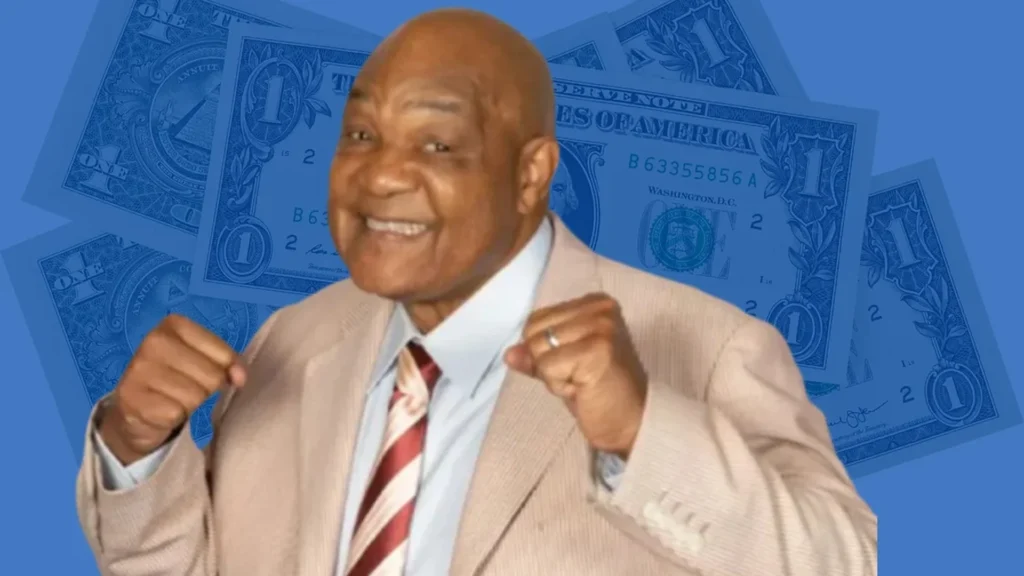
He turned that raw power into a gold medal at the 1968 Mexico City Olympics, launching a professional career that would eventually make him a two-time world heavyweight champion. On paper, it looked like the start of a fighter’s fortune. In reality, the real payday was still decades away.
Career and Income Breakdown
1. Boxing Earnings
Boxing produced real money, but not fortune-level money. Between 1969 and 1977, Foreman had set aside around 5 million dollars from his fight earnings, worth roughly 20 million dollars today. His biggest single payday came in 1994, when he earned 12.5 million dollars for beating Michael Moorer to reclaim the heavyweight title at age 45, becoming the oldest heavyweight champion in history.
That win rebuilt his legacy, but not his bank account on its own. By 1987, roughly a decade into his first retirement, Foreman had lost most of his boxing money to poor investments and an expensive lifestyle, which is part of what pushed him back into the ring.
2. The George Foreman Grill Deal
The turning point came in the 1990s, when Foreman lent his name to a countertop grilling machine made by Salton Inc. The product became a household staple, and in 1999 he was paid 138 million dollars to sell the naming rights outright to Salton, a sum that dwarfed his entire boxing career earnings combined.
Before that buyout, he had also earned steady royalties as the grill sold in massive numbers worldwide. Industry estimates place his personal earnings from the grill partnership at well over 200 million dollars across royalties and the naming rights sale, making it by a wide margin the single biggest driver of George Foreman’s net worth.
3. Other Business Ventures
Foreman did not stop at the grill. He pitched brands including Doritos, KFC, and Meineke, launched a line of cleaning products, and put his name on personal care items and a prescription shoe line for diabetics. He also worked as an HBO boxing commentator for years, which gave him a steady, lower-profile income stream separate from his licensing deals.
Book royalties added another layer. Foreman wrote several titles, including memoirs and motivational works, and made appearances on shows such as Dancing with the Stars and American Inventor. None of these came close to the grill money, but together they diversified his income so no single deal carried his entire fortune.
Income Sources
Foreman’s wealth came from a mix of channels rather than one paycheck. The main contributors were:
Boxing purses, led by his 1994 title win against Michael Moorer.
The George Foreman Grill royalty deal and the 1999 naming rights sale to Salton.
Ongoing endorsement deals with national food and retail brands.
Broadcasting income from his long run as an HBO commentator.
Book royalties, speaking fees, and television appearances.
Real estate holdings and private investments built up over several decades.
Notable Assets
Foreman settled in Kingwood, an upscale suburb of Houston, where he raised his family. He later kept ownership of that property while relocating elsewhere in Texas. He also owned a 300-acre ranch in Marshall, Texas, his hometown, complete with horses and cattle.
In 2002, he added a beachfront townhouse in Malibu, California, purchased for 2.3 million dollars and used as a vacation property. His most striking estate was a custom Mediterranean-style mansion in Huffman, Texas, built in the early 2000s on 29 acres. That property included nearly 12,000 square feet of living space with an 11,000-square-foot garage built to hold 55 cars, reflecting his well-documented passion for automobiles. The Huffman estate was listed for 9.5 million dollars in late 2024.
George Foreman’s Financial Legacy
Ye raha ending ke liye H2 heading + paragraph, article ke end mein add kar dena:
George Foreman’s Financial Legacy (H2)
George Foreman’s story shows that a boxer’s real payday does not always come from the ring. His fight purses gave him a name, but it was the Foreman Grill deal that turned that name into a 300 million dollar fortune. Diversified income from broadcasting, books, and real estate kept that wealth stable long after his boxing career ended, making his financial path as notable as his record in the ring. Modern boxing stars such as Canelo Alvarez have also built income beyond fight purses through promotions, brands and other businesses.
What Made Foreman’s Wealth Different
Most boxers see their fortunes fade soon after retirement. Foreman went the opposite direction, rebuilding what he lost in the 1980s through a single endorsement deal that outlasted his entire career in the ring. His net worth stands as a rare case where a retired athlete’s business decisions ended up worth more than every fight purse combined.
The Bigger Picture Behind the Numbers
A 300 million dollar net worth tells only part of George Foreman’s story. Behind the figure sits a comeback from near bankruptcy in the 1980s, a title win at age 45, and a business partnership that reshaped how athletes think about licensing their name. Few sports careers offer as clear a lesson in turning fame into lasting financial security
Boxing Fame Versus Business Fortune
George Foreman’s net worth is a reminder that fame and fortune do not always arrive at the same time. His boxing career built the recognition, but it was a countertop grill, not a title belt, that built the fortune. That gap between fame in the ring and wealth outside it remains one of the most cited examples in sports business history.