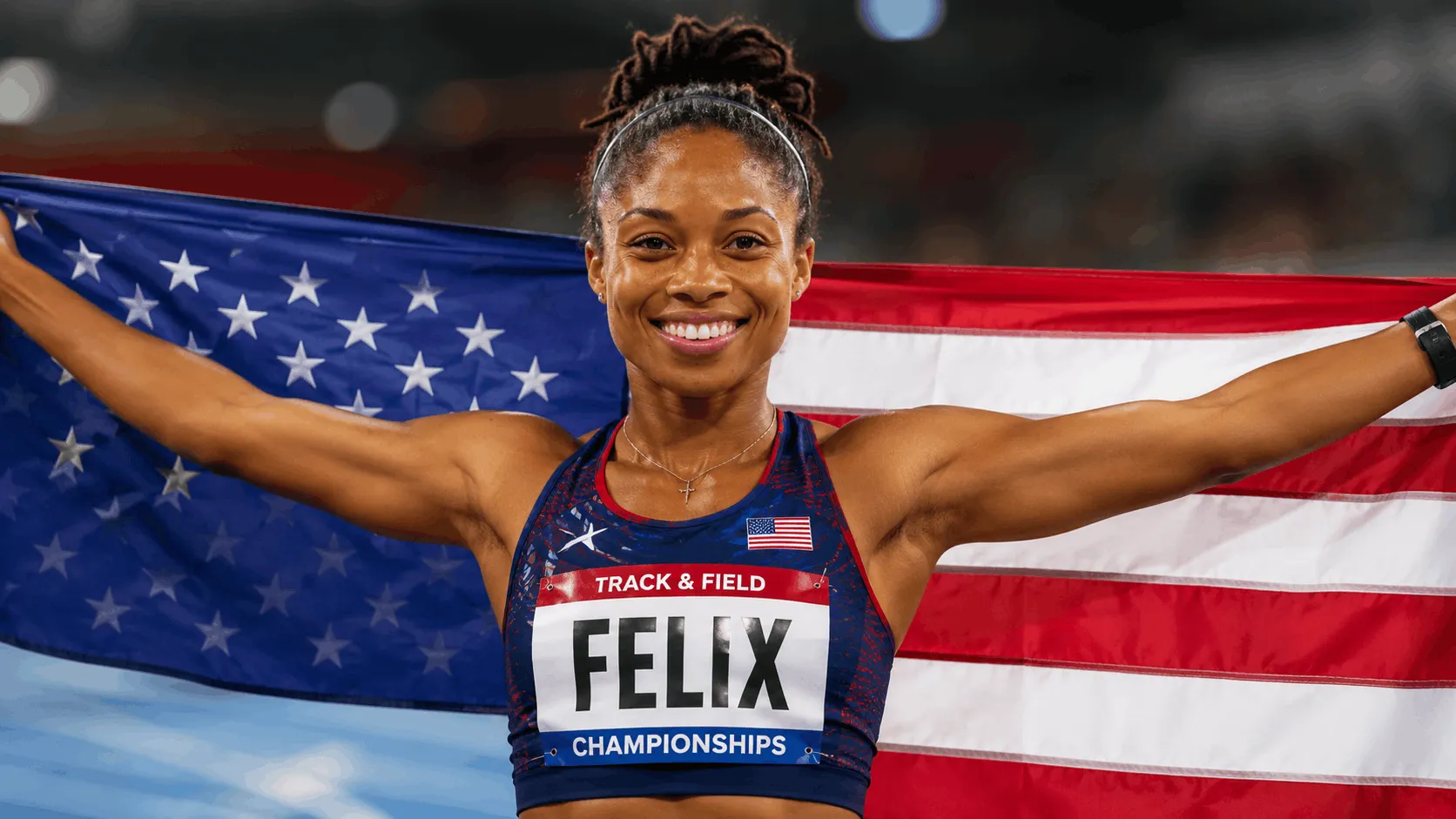
Sha’Carri Richardson’s net worth is estimated at $4 million as of 2026, according to Celebrity Net Worth. That figure comes far less from her sprint times than from a growing list of brand partnerships, led by her deal with Nike. Richardson is a two-time Olympic medalist and two-time world champion, and she has turned her results on the track, plus her bold personal style, into a real off-track income stream.
Quick Facts
| Category | Detail |
| Full name | Sha’Carri LaNay Richardson |
| Net worth | Estimated $4 million (2026) |
| Born | March 25, 2000, in Dallas, Texas |
| Profession | Track and field sprinter |
| Main events | 100 meters, 200 meters, 4x100m relay |
| College | Louisiana State University |
| Coach | Dennis Mitchell |
| Main income sources | Nike endorsement, race earnings, additional sponsorships |
What Is Sha’Carri Richardson’s Net Worth
Most trackers land on a similar range for Richardson’s wealth, though the exact number moves depending on the source. Celebrity Net Worth and Parade both cite $4 million as of early 2026, while a few other outlets have placed the figure closer to $3 million or as high as $6 million. That spread likely comes down to how each site treats her unconfirmed Nike contract terms, since the deal itself has never been made public.
Athlete net worth figures like this one are estimates rather than audited numbers. Sites that track them piece together a picture from public race earnings, reported sponsorship values, real estate records and lifestyle clues such as cars and homes, since track and field athletes do not file public salary disclosures the way team-sport pros sometimes do. That is why two reputable outlets can land on different totals for the same person.
What is clear is where the money does not come from. Richardson’s base pay as a professional sprinter is typically $45,000 to $55,000 a year, a modest sum next to athletes in team sports. Her wealth is instead built almost entirely on endorsement income layered on top of prize money from major championships.
Early Life and the Road to LSU
Richardson was born on March 25, 2000, in Dallas, Texas. She was raised primarily by her grandmother, Betty Harp, and an aunt she has described as a mother figure, after growing up without a close relationship with her biological parents. She started running as a child and went on to win state titles in the 100 and 200 meters in high school.
Her breakout moment came in 2019, during her freshman year at Louisiana State University. Richardson ran 10.75 seconds to break the NCAA Division I collegiate record in the 100 meters, a time that made her one of the ten fastest women in history at just 19 years old. That single race set up everything that followed.
Career Earnings: From Olympic Trials to Tokyo
Richardson’s income has tracked her results, but not always in a straight line. Her path from college star to two-time world champion has included one of the most talked-about setbacks in recent track history, followed by a steady climb back to the top of her sport.
The 2021 Setback
In June 2021, Richardson won the 100 meters at the US Olympic Trials in 10.86 seconds, appearing to punch her ticket to the Tokyo Games. Days later, she was suspended after testing positive for THC. She said she had used cannabis, which was legal in Oregon at the time, to cope with her mother’s death the week before trials. The suspension kept her out of the Olympics entirely, but it also made her one of the most recognizable names in American track.
Budapest and Paris: Building a Resume
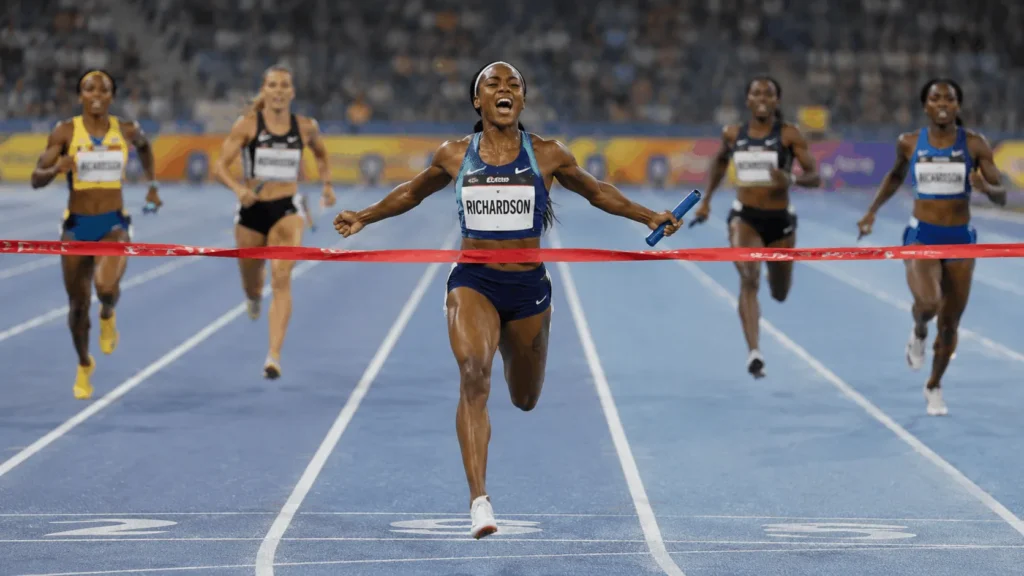
Richardson answered that setback in 2023, winning the 100 meters at the World Athletics Championships in Budapest in a championship record of 10.65 seconds. She added a bronze in the 200 meters and ran the anchor leg on the gold medal 4x100m relay team, which also set a championship record. At the 2024 Paris Olympics, she won silver in the individual 100 meters and gold in the 4x100m relay, cementing her as one of the sport’s top earners heading into the next cycle.
Tokyo 2025: A Tougher Season
An injury-affected 2025 season made Richardson’s title defense harder than expected. She finished fifth in the individual 100 meters at the 2025 World Athletics Championships in Tokyo, running 10.94 seconds. She got redemption days later, anchoring the US women to gold in the 4x100m relay in 41.75 seconds. Afterward, she said the year had set the tone for what comes next, a reminder that sponsor interest in track athletes often rides on moments like a relay comeback as much as an individual title.
What Her Medals Actually Paid
Most coverage of Richardson’s finances skips over how track prize money actually works, and it is more layered than a single number. World Athletics began paying Olympic prize money for the first time at the 2024 Paris Games, giving $50,000 to the gold medalist in each of the 48 track and field events, with relay teams splitting that amount among the squad. Only gold medalists were paid that year, so her individual silver did not carry a World Athletics prize, though her relay gold did.
Separately, the US Olympic and Paralympic Committee pays its own medal bonuses on top of that, at $37,500 for gold, $22,500 for silver and $15,000 for bronze, which means Richardson’s Paris silver still came with a payout, just from a different source. At World Championships, gold medalists earn $70,000, the payout tied to her 100m and relay wins in Budapest and her relay gold in Tokyo.
Endorsement Deals and Sponsorships
Endorsements do the heavy lifting for Richardson’s net worth, and Nike sits at the center of that. Her deal with the brand has been reported at roughly $20 million over five years, though Nike has never confirmed the figure. She has since become the face of the Nike x Jacquemus collection, a high-profile fashion crossover that leaned into her reputation for bold hair, nails and makeup on the track.
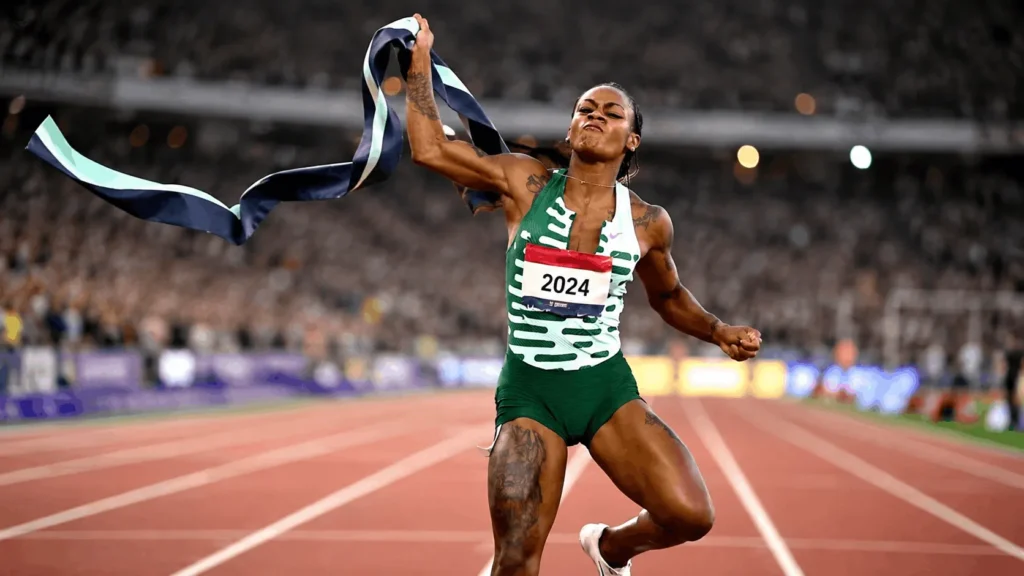
Beyond Nike, Richardson has held sponsorships with Beats by Dre, Oikos, Android, Sprite and Olay. In 2024, she also joined a Danone campaign alongside fellow Olympians Jordan Chiles and Kristie Mewis, part of a broader push by the brand into women’s sports marketing. Each deal adds to a portfolio that looks more like a fashion or beauty influencer’s income mix than a typical track athlete’s, and that mix is part of what separates her earnings from sprinters who rely almost entirely on race winnings and appearance fees, since brand deals do not disappear the way prize money can in an off year.
Other Income: Assets and Investments
Richardson has kept most of her personal spending out of the spotlight compared to athletes in bigger leagues, but a few details have surfaced. She has been reported to own a roughly $580,000 home in Clermont, Florida, purchased in 2022, and a Mercedes-Benz worth an estimated $70,000. Neither figure has been independently confirmed by Richardson herself, so they should be treated as reported estimates rather than verified facts.
How Her Net Worth Compares to Other Sprinters
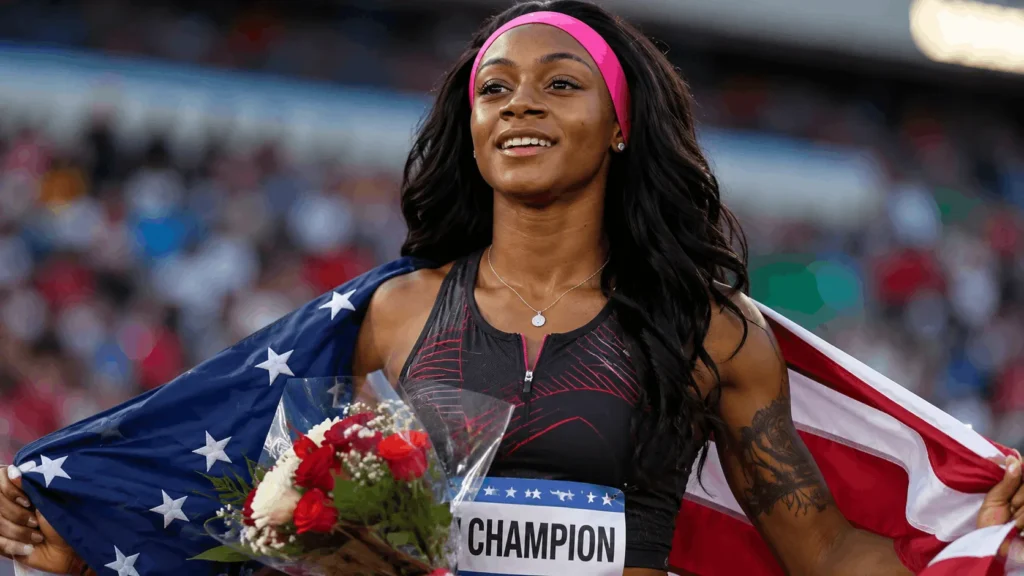
Richardson’s $4 million estimate puts her roughly in line with Noah Lyles, the reigning Olympic 100m champion, whose net worth is also estimated at $4 million by Celebrity Net Worth. That similarity says less about their relative fame and more about a ceiling that most sprinters run into: track and field simply does not pay salaries the way team sports do, so even the sport’s biggest stars depend on a handful of sponsor checks.
The gap becomes clearer next to athletes who cross over into other markets. Simone Biles, for example, has an estimated net worth in the $20 million range, built on a similar mix of endorsements but spread across a wider set of brands and a gymnastics fan base that skews toward younger, merchandise-buying audiences. Richardson’s earnings ceiling will likely keep climbing if her Nike partnership expands or if she lands a signature shoe or apparel line, but for now her wealth sits closer to her fellow sprinters than to Olympic sport’s true crossover stars.
Richardson’s own story helps explain why the sprinting pay scale looks the way it does. Track meets outside global championships rarely pay life-changing appearance fees, and even a world record does not come with a signing bonus the way it might in other sports. What moves the needle for someone like her is visibility, and Richardson has built plenty of it through her fashion sense, her comeback narrative, and her willingness to talk openly about setbacks. That combination is what turned a $45,000 base salary into a multimillion-dollar brand.
Sha’Carri Richardson’s net worth will keep shifting as her Nike deal nears renewal and as new championships add fresh prize money and headlines. For now, the estimate holds at roughly $4 million, a number built almost entirely off the track rather than on it.