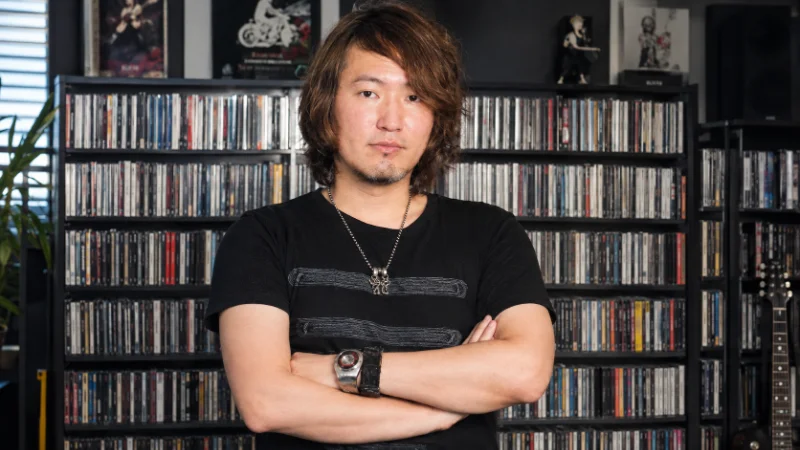
Tite Kubo drew Bleach for fifteen years, then watched the manga’s final arc get cut short by a shoulder injury he had been hiding from readers the whole time. That combination, a shonen artist whose body finally gave out on him mid-story, is the part of his career that most biography pages skip past. It also explains almost everything about how Bleach ended the way it did.
| Category | Details |
|---|---|
| Real Name | Noriaki Kubo (久保宣章) |
| Pen Name | Tite Kubo (久保帯人) |
| Born | June 26, 1977 |
| Birthplace | Fuchu, Aki District, Hiroshima Prefecture, Japan |
| Nationality | Japanese |
| Occupation | Manga artist, character designer |
| Notable Works | Bleach, Zombiepowder, Burn the Witch |
| Years Active | 1996 to present |
| Major Award | Shogakukan Manga Award (2004) |
| Bleach Sales | Over 130 million copies in circulation (as of 2022) |
| Marital Status | Married (2012); spouse’s identity not publicly disclosed |
Who Is Tite Kubo
Kubo was born Noriaki Kubo on June 26, 1977, in Fuchu, Aki District, Hiroshima Prefecture, and later adopted the pen name Tite Kubo, written 久保帯人 in Japanese. His father served as a town council member, and he grew up with a younger brother and sister. He is a manga artist and character designer best known for creating Bleach, the shonen series that ran in Weekly Shonen Jump from 2001 to 2016.
He decided he wanted to be a manga artist while still in elementary school, after reading Masami Kurumada’s Saint Seiya. That early fixation on one series set the direction for the next three decades of his working life.
Early Life and the First Steps Toward Manga
Kubo grew up in a working-class corner of Hiroshima Prefecture rather than in Tokyo’s manga scene, which is worth noting because so much of the industry’s talent pipeline runs through the capital. He entered a manga contest in a magazine as a teenager, and although he did not win, one of the magazine’s editors noticed his talent and began working with him on joint projects.
That relationship led to his first published work. His debut one-shot, “Ultra Unholy Hearted Machine,” appeared in Weekly Shonen Jump Special in 1996. Two more one-shots followed before he attempted anything longer.
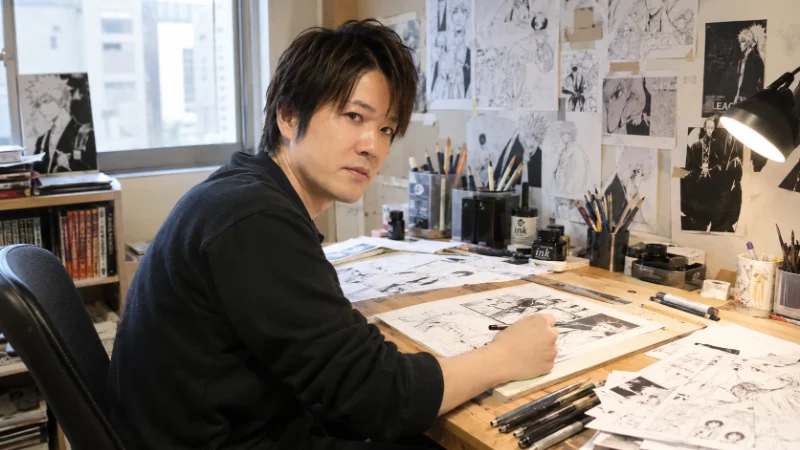
His earliest artistic influence was not an action manga at all. Kubo has said Shigeru Mizuki’s Gegege no Kitaro was his first influence, the first manga whose characters he ever tried to sketch, and that he was drawn to Mizuki’s yokai designs. He also credited Akira Toriyama’s Dragon Ball with teaching him that villains needed to look strong, scary, and cool without exception.
Zombiepowder: A First Series That Didn’t Take
Kubo’s first serialized manga was Zombiepowder, which began in Weekly Shonen Jump in 1999. It ran only 27 chapters before Shueisha canceled it in 2000. By his own account, he wrote it during a period of real emotional strain, and he later said he had leaned too heavily on his editor’s notes instead of trusting his own instincts.
That failure turned out to matter. Kubo has described Zombiepowder as the series where he learned how weekly serialization actually works, a lesson he carried directly into his next project.
Bleach Begins: Building a Shonen Jump Phenomenon
Bleach launched in Weekly Shonen Jump in 2001 and followed Ichigo Kurosaki, a teenager who gains the powers of a Soul Reaper and takes on the job of guiding lost spirits and fighting monstrous Hollows. Kubo did not expect the premise to sustain a long run. He has said he originally assumed the series would last around five years.
Instead it ran for fifteen. By 2022, Bleach had more than 130 million copies in circulation worldwide, across its full run and collected volumes. That put it alongside Naruto and One Piece as one of the three flagship series of its Shonen Jump generation, a trio fans still refer to as the “Big Three.”
Inside the Craft: How Kubo Builds a World
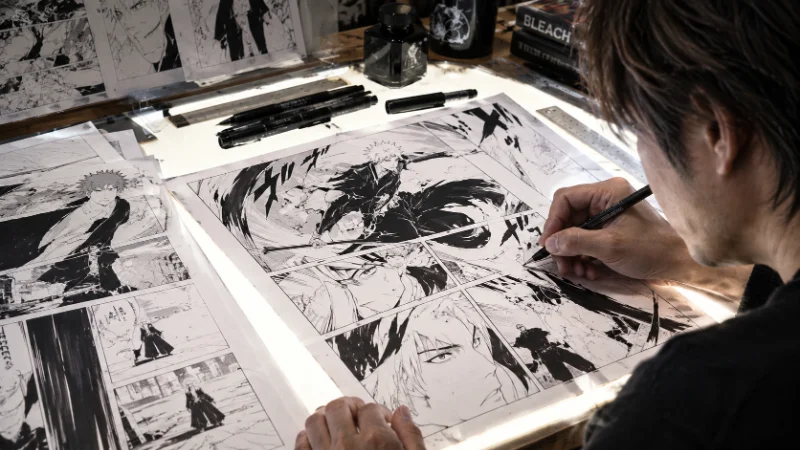
Kubo’s panels are known for sharp cuts between angles and comparatively sparse background art, a choice that keeps the focus on character silhouettes and motion rather than scenery. His character designs stayed angular and lean through Zombiepowder and Bleach’s early chapters, then filled out gradually as the series went on, often with touches of body horror worked into Hollow and Arrancar designs
.
He also built language into the world’s rules. Soul Reaper attacks and equipment carry Japanese names, Quincy powers use German, X-Cution characters use English terms, and Hollow and Arrancar abilities use Spanish, which Kubo has said he chose because he finds the language bewitching and mellow. Even small design choices came from unplanned instinct rather than a master plan. He has said Chad’s design simply looked like it belonged to someone of Mexican heritage, so he wrote that background into the character afterward rather than planning it in advance.
The Cost of Success: Health, Hiatus, and a Rushed Ending
For years, Kubo kept drawing Bleach on a weekly deadline while his body absorbed the physical toll. In a 2017 Giga Jump interview, he explained that he had a habit of leaning his body weight on his left shoulder while drawing, and that the strain eventually caused a partial fracture. By the time the manga’s final arc was underway, he was working through torn shoulder ligaments.
That injury, not falling sales or an editorial decision, is why Bleach’s final arc feels compressed compared to earlier storylines. Kubo later confirmed in a TBS Radio interview that the ending happened on his own timeline rather than under pressure from Shonen Jump, but he also acknowledged the toll the weekly schedule had taken on his body over fifteen years.
The strain did not stop when the manga ended in 2016. Kubo has said he expected to finally rest once Bleach wrapped, but instead found himself dealing with a lingering sense of loneliness he could not immediately explain. He has spoken about that period more openly than most manga creators discuss their post-series mental health.
Life After Bleach: Burn the Witch and a Slow Return
Kubo did not disappear from manga entirely. He released the one-shot Burn the Witch in 2018, then expanded it into a four-chapter run published in August 2020. The story, set in a European branch of the Soul Society bureaucracy, gave him a smaller, self-contained project to work on after years of managing Bleach’s sprawling cast.
He returned to the Bleach universe itself in 2021 with a one-shot epilogue chapter set after the Thousand-Year Blood War, giving longtime readers a glimpse of the surviving cast years later. Neither project asked for the same weekly grind that had worn him down the first time.
Bleach’s Second Wind: Thousand-Year Blood War and New Games
Bleach found a new audience when Studio Pierrot adapted its final arc as Bleach: Thousand-Year Blood War, releasing new parts across 2022 through 2024, with a further installment confirmed for 2026. Kubo has been involved in shaping added scenes for the anime, giving him a chance to fill in gaps the manga’s rushed ending had left behind.
The revival reached beyond animation. Bleach: Brave Souls, a mobile and console action RPG launched in 2015, now features more than 1,000 character illustrations Kubo drew himself, and 2025 brought Bleach: Rebirth of Souls, a 3D fighting game released in March for PlayStation, Xbox, and PC. A second rock musical adaptation was also announced for 2025.
Awards, Sales, and Recognition
Kubo received the Shogakukan Manga Award for Bleach in 2004, one of the manga industry’s most established prizes, which helped cement his standing among Weekly Shonen Jump’s top creators. Sales figures have been reported at over 120 million copies as of 2018 and over 130 million in circulation as of 2022, figures that count both the original run and later collected editions.
His exact personal net worth has not been officially disclosed, and estimates circulating online vary widely and are not independently verifiable, so they are not repeated here as fact.
Personal Life
Kubo keeps his personal life largely private. Public records note that he married in 2012, and he has generally declined to discuss his family beyond that in interviews, focusing conversations instead on his work and his characters.
Why Tite Kubo’s Career Still Matters
Kubo’s real influence sits in two places at once. Bleach’s visual language, sparse backgrounds, sharp angular cuts, and stylized multilingual power names, shaped how a generation of shonen artists approached action sequences after him. Newer creators in the battle-manga space have pointed to his pacing and panel choices as a direct reference point.
The second part of his legacy is less flattering to the industry that produced it. His willingness to speak plainly about a torn shoulder and post-series depression put a human cost behind a series that sold well over a hundred million copies, and it gave other overworked weekly manga artists public language to describe what the job had done to them too.